Neutral Buoyancy ROV Tether

Neutral Buoyancy ROV Tether
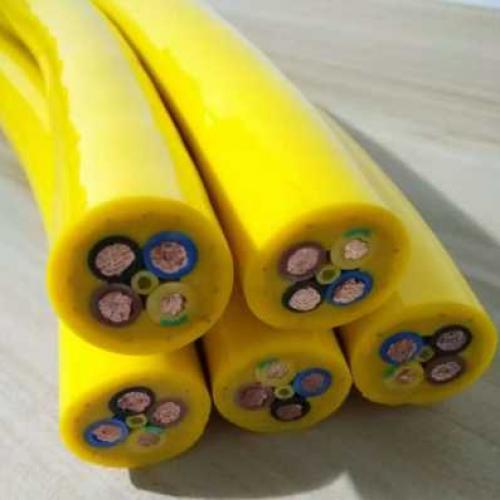
A Neutral Buoyancy ROV Tether is a specialized underwater cable designed to achieve near-neutral buoyancy in water, helping minimize cable-induced loads and drag on the ROV during subsea operations. Unlike conventional underwater cables that tend to sink or float, neutral buoyancy designs achieve a balanced density in seawater, allowing the cable to remain suspended with minimal impact from gravity or uplift forces. This significantly improves ROV maneuverability, reduces mechanical stress on the tether system.
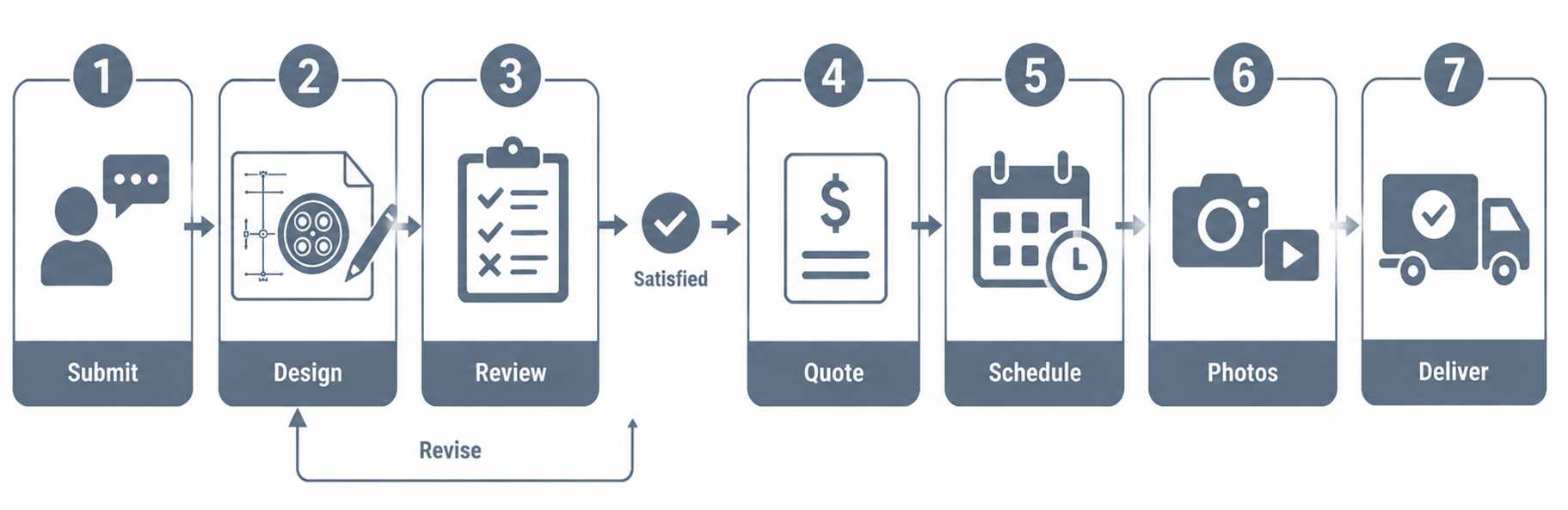
RouLine ROV Tether Cable is custom-designed based on operating depth, load conditions, and system architecture to ensure optimal performance in demanding underwater environments.


Custom Cable Solutions | Flexible MOQ | Fast Lead Time |
Key Features
↗Marine-grade polyurethane foam layer designed for seawater-resistant neutral buoyancy performance
Neutral buoyancy can be engineered to match:
freshwater (~1.00 g/cm³),
seawater (~1.02–1.03 g/cm³), or other specified densities.
↗Cable Diameter: Customizable from 2 mm to 60 mm
↗Tensile Strength: Customizable from 100 kg to 10 tons
↗Water Blocking Filler: Special water-blocking yarn for enhanced moisture protection
↗Outer Jacket: Glossy seawater-resistant polyurethane (PUR) sheath for marine environments
↗Shielding Coverage: 85% coverage density
Specifications
Item | Specification |
Conductor | Fine-stranded, extra-flexible tinned soft copper wire |
Conductor Standard | IEC 60228 (VDE 0295) Class 6 |
Insulation | TPE, TPV, XLPE, DPEM |
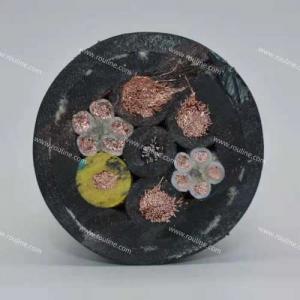
Core Structure | Anti-twist layering, grouped gap filling, twisted pairs, and layered binding |
Optical Fiber | Single-mode / Multi-mode, 6–24 fibers |
Shielding | Individual Pair/Unit Shielding (aluminum foil + copper braid) Overall Shielding (copper braid). Shielding coverage density ≥85%. |
Tensile Member | Central Kevlar core, interstitial Kevlar fill, or Kevlar braid |
Outer Sheath | PUR, PE, TPU |
Working Voltage | 300/300 V – 0.6/1 kV (for higher voltage, please contact ) |
Test Voltage | 2,000 V |
Insulation Resistance | ≥20 MΩ·km at 20°C |
Minimum Bending Radius | Dynamic: 7.5 × OD; Fixed: 4 × OD |
Operating Temperature | -40°C to +105°C |
We offer solutions tailored to specific customer requirements.

Applications
The ROV Tether Cables is designed for demanding subsea and marine applications, including:
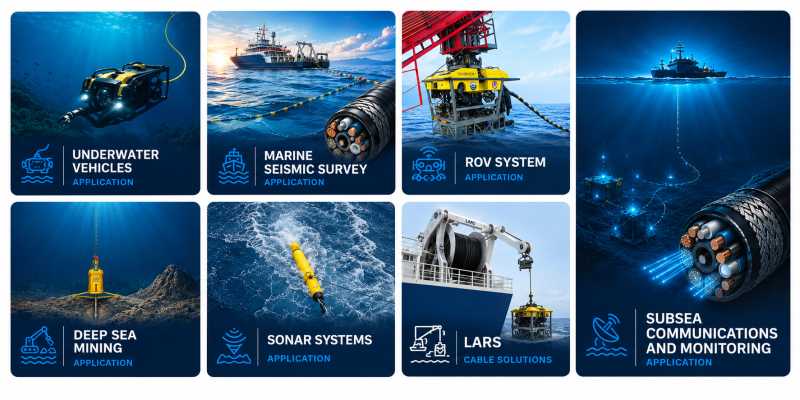
↗Marine Seismic Survey Systems
Case Study
For extreme cold environments, customized ROV tether cables are engineered to maintain flexibility, mechanical strength, and reliable performance under low-temperature offshore and polar operating conditions.
→ Low Temperature ROV Tether Cable Solutions


Quality Testing & Control | Manufacturing Process |
Manufacturing Process
RouLine industrial cables are manufactured through controlled processes covering extrusion, reinforcement, assembly, and final inspection. Below are examples of key manufacturing stages that demonstrate our production capabilities and quality control processes.


→Cable Core Assembly Process →Wire Stranding Process →Kevlar braiding process
RouLine ROV cables are manufactured according to project-specific requirements, from conductor and reinforcement selection to cable assembly, forming, testing, and final inspection.
More Videos of ROV Cable Manufacturing →
Test Equipment
Industrial cables manufactured by RouLine are inspected using dedicated equipment for electrical, mechanical, and environmental testing. Depending on the cable design, testing may include high-voltage testing, insulation and continuity checks, tensile testing, flexing, temperature-humidity, salt-spray, and dimensional inspection. Testing procedures can be defined according to cable construction, operating depth, voltage rating, mechanical requirements, and applicable standards. →View the Test Equipment in Use

Ordering Information
Customization: Fully supported
MOQ: project-based negotiation
Standard Lead Time: 3-6 weeks after order confirmation