

Engineering Steel Wire Armoured Layers
for ROV Tether & Umbilical Cable
ROV tether and umbilical cables operate in some of the world's most demanding underwater environments. During deployment, retrieval and continuous operation, the cable is exposed to high tensile loads, seabed abrasion, impact from offshore structures and repeated dynamic bending. Without a properly engineered armour layer, these mechanical stresses can significantly reduce cable life and reliability.
Steel wire armour is designed to protect the cable while carrying mechanical loads that would otherwise be transferred to the conductors and fiber optics. The armour construction, wire material and layer configuration should be selected according to the operational depth, towing load, installation method and service conditions.
As a custom cable manufacturer, we engineer steel wire armoured ROV tether and umbilical cable solutions for offshore, subsea inspection, work-class ROVs, underwater mining and marine research applications.

Our Cable Solutions
Our steel wire armoured cable solutions are engineered according to the mechanical requirements of each underwater project.
Integrated power, signal and fiber optic transmission with customized armour layers for offshore equipment and subsea control systems.
Engineered cable constructions with tailored armour design, conductor size, tensile member and outer sheath materials.
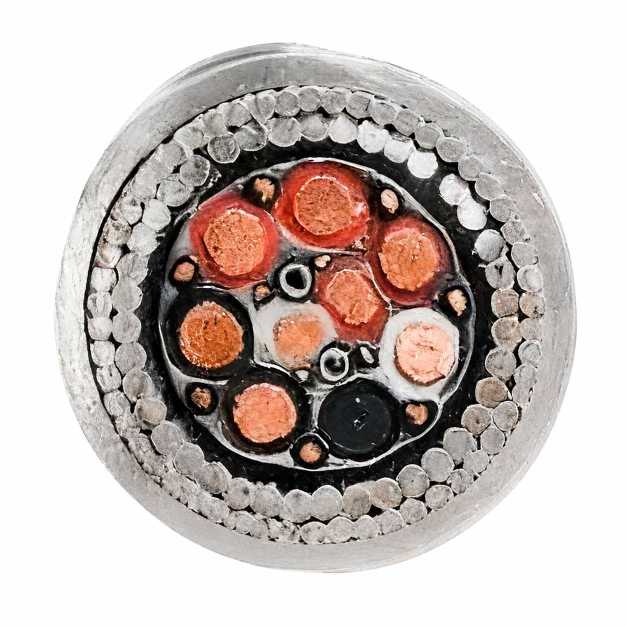
ROV Tether Steel Wire Armour Construction Options
Selecting the appropriate armour construction directly influences the cable's mechanical performance, flexibility and service life.
Single-Layer Armour
Single-layer armour provides reliable mechanical protection while maintaining a relatively small cable diameter and lower weight. It is commonly selected for lightweight ROV tether cables where flexibility is a primary requirement.
Typical applications include:
Observation-class ROVs
Small inspection vehicles
Portable subsea systems
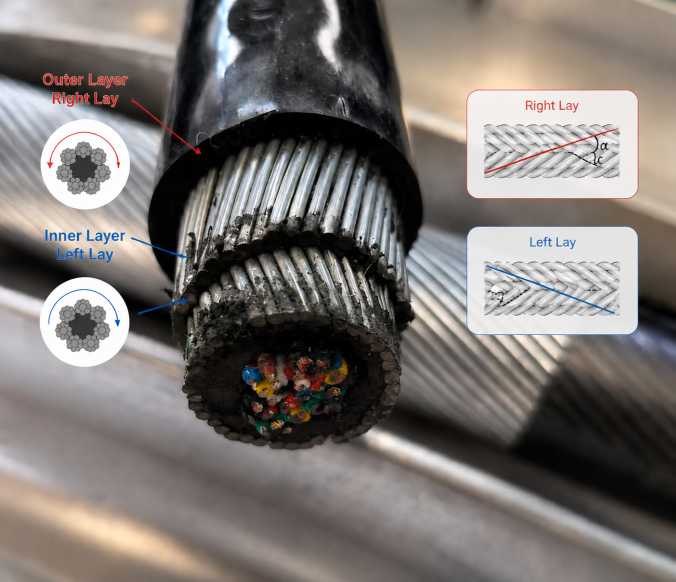
Double-Layer Armour
Double-layer armour significantly increases tensile capacity, impact resistance and protection against crushing. This construction is commonly used for heavy-duty umbilical cables operating in harsh offshore environments.
Typical applications include:
Work-class ROVs
Offshore construction equipment
Subsea mining systems
Deepwater deployment
Opposite Lay Directions
Double armour layers are commonly applied with opposite lay directions. This balanced construction helps reduce cable rotation, improves torsional stability and distributes tensile loads more evenly during deployment and retrieval.
Armour Coverage Ratio
Armour coverage determines how much of the cable surface is protected by steel wires. Increasing coverage generally improves mechanical protection but also increases cable stiffness and weight. For dynamic ROV tether applications, armour coverage is optimized to provide sufficient protection while maintaining long-term bending performance.
Selecting Steel Wire Materials
The choice of armour material affects corrosion resistance, mechanical strength and long-term durability in subsea environments.
Galvanized Steel Wire
Galvanized steel wire offers high tensile strength with economical corrosion protection. It is suitable for many offshore applications where cost and mechanical performance must be balanced.
Stainless Steel Wire
Stainless steel provides excellent corrosion resistance for long-term seawater exposure and aggressive marine environments. It is often selected for deepwater and high-reliability subsea systems.
Polymer-Coated Steel Wire
Polymer-coated steel wire adds an additional protective barrier between the armour and the surrounding environment, reducing corrosion, minimizing abrasion between armour layers and improving service life under repeated dynamic movement.
Custom Design Capabilities
Every subsea project has different mechanical requirements. Rather than using standard cable constructions, we engineer steel wire armoured ROV tether and umbilical cable solutions based on the operating environment and performance objectives.
Our customization capabilities include:
Single or double steel wire armour
Customized tensile strength
Galvanized, stainless or polymer-coated armour wires
Power, signal and fiber optic hybrid constructions
Flexible armour designs for dynamic applications
Outer sheath materials including PUR, TPU and other marine-grade compounds
Cable diameter and weight optimization
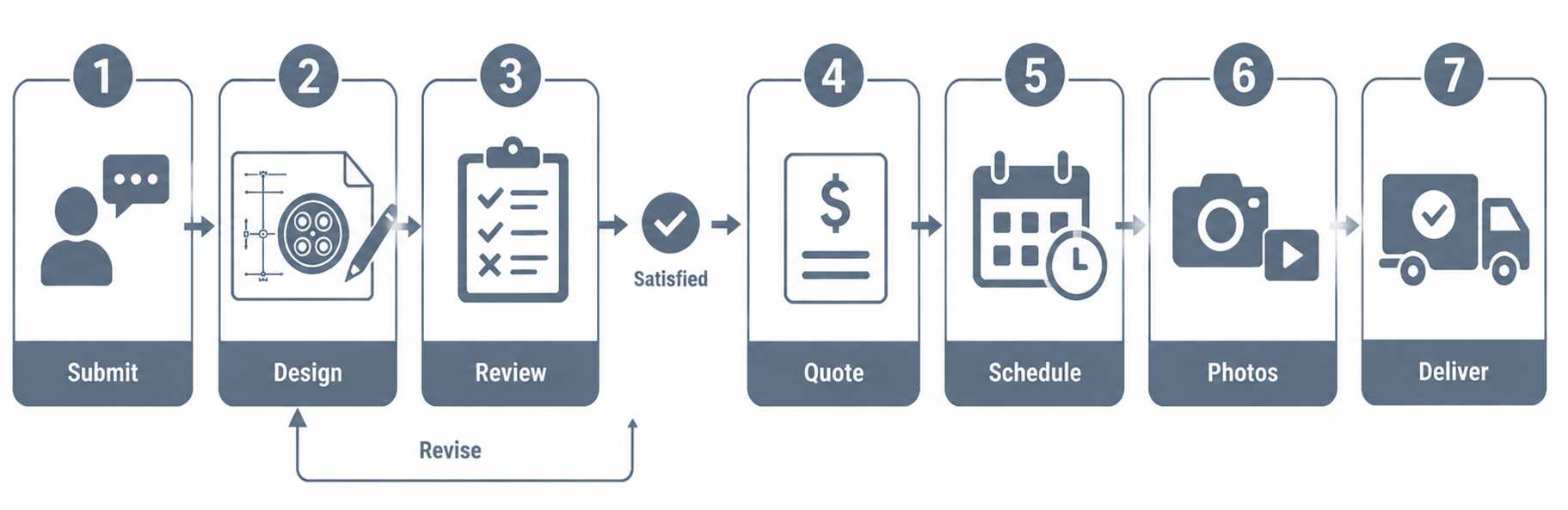
Whether the project involves offshore inspection, underwater robotics or deepwater intervention, the armour layer is engineered as part of the complete cable system rather than as an isolated protective component.
FAQ
What is the difference between single and double steel wire armour?
Single-layer armour provides good protection with higher flexibility and lower weight, making it suitable for lightweight ROV tether cables. Double-layer armour offers greater tensile strength and impact resistance for heavy-duty offshore and subsea applications.
How do you choose the correct armour layer?
The armour configuration should be selected according to tensile load, installation depth, dynamic bending requirements, abrasion conditions and the acceptable cable diameter and weight. An engineered design ensures the cable meets both mechanical and operational requirements.
Does steel armour reduce cable flexibility?
Yes, increasing the amount of steel armour generally increases cable stiffness. However, by optimizing wire diameter, lay direction and armour coverage, a steel wire armoured ROV tether can maintain excellent flexibility while providing the required mechanical protection.
What steel materials are commonly used for subsea cables?
The most common materials include galvanized steel wire, stainless steel wire and polymer-coated steel wire. The best choice depends on corrosion resistance requirements, mechanical loading, operating environment and expected service life.
Post time:2026-07-28
