Underwater Ethernet Cable | CAT5, CAT5e, CAT6, CAT6a
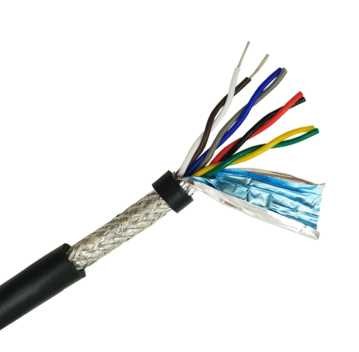
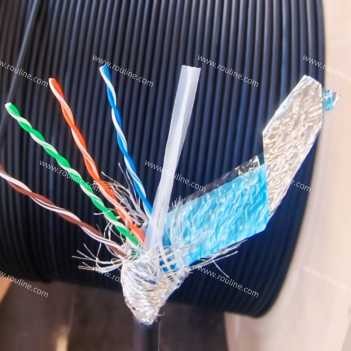

Underwater Ethernet Cable
CAT5, CAT5e, CAT6, CAT6a
Introduction
This cable is designed for subsea and underwater applications requiring reliable data transmission under continuous immersion and dynamic flexing conditions. It combines high mechanical flexibility with robust resistance to seawater, pressure variations, oils, and extreme temperatures. The cable is halogen-free, silicone-free, and flame retardant according to IEC60332-1.
Specifications
Conductor: Bare copper, Class 5 flexibility (meets IEC60228)
Insulation: Material: HDPE (High-Density Polyethylene)
Cabling: Pairs are twisted with optimized lay lengths
Shielding: Braid: Tinned copper braid, 85% optical coverage
Inner Layer: Torsion-resistant layer
Outer Sheath: Flexible PVC (standard) or PUR (preferred for extended submersion)
OD: 7.0 mm ±0.2 mm
Color: (specify as required)
Mechanical Characteristics
Minimum bending radius: 5 × cable diameter
Flex life: ≥ 5 million cycles (PVC sheath); ≥ 10 million cycles (PUR sheath) – suitable for ROV tether management systems and underwater manipulators
Environmental Resistance
Submersion: Continuous operation in fresh and seawater
Pressure resistance: Suitable for moderate depths (specify depth rating if available, otherwise note tested pressure)
Operating temperature:
PVC version: -25°C to +80°C
PUR version: -60°C to +105°C
Fluid resistance: Excellent resistance to seawater, mineral oils, hydraulic fluids, and dilute chemicals
UV resistance: Suitable for above-water exposure during deployment
Biofouling: Smooth sheath surface reduces marine growth adhesion
Electrical Characteristics
Characteristic impedance: 100 Ω ±15 Ω (stable under pressure and temperature variations)
Conductor resistance: meets Class 5 requirements (IEC60228)
Insulation resistance: (specify if available)
Standards Compliance
Flame retardant: IEC60332-1
RoHS compliant
Designed to meet Category 5e / 6 performance (depending on specific construction)
Applications
ROV (Remotely Operated Vehicle) tethers
Subsea sensors and instrumentation
Underwater cameras and communication systems
Marine robotics and autonomous underwater vehicles (AUVs)
Offshore and oceanographic research equipment
Related Readings
1. Selection Comparison of Embedded Communication Modules in Hybrid Cables:
Fiber Optic Module vs. Ethernet (Twisted-Pair) Module